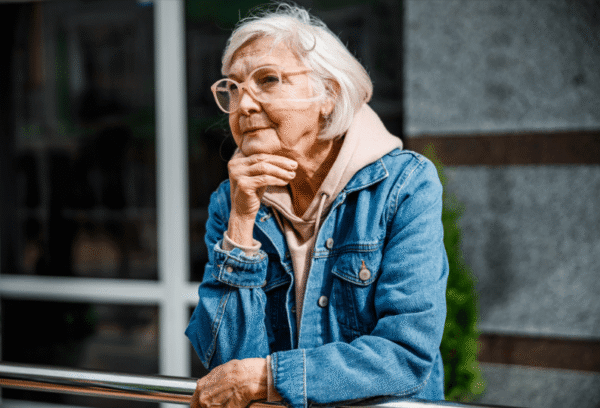

Erinn Baldeschwiler was 48 when she said it.
She had metastatic breast cancer. She knew what was coming, and she’d made a kind of peace with the outcome — no treatment was going to change it.
But there was one thing she couldn’t accept.
“The last thing I want is to be terrified and scared and anxious, especially when I pass.”
It wasn’t death she was fighting. It was the dread. The anxiety that had moved in alongside the diagnosis and refused to leave.
And she believed there was something that could help — if she could just get access to it.
Here's something our medical system does strangely.
We pour enormous resources into treating cancer. We spend comparatively very little treating the person who has it.
Patients with life-limiting illness are often in deep emotional and spiritual distress. Sleeplessness. Dread. Major depression. A demoralization that sets in even in people who were never clinically depressed before.
Antidepressants can dull the edges. They rarely touch the thing underneath.
Which is a question, not a symptom: What was all of this for?
This is where it gets remarkable.
In 2016, Johns Hopkins ran a randomized double-blind trial with 51 cancer patients experiencing significant anxiety or depression.
The results were dramatic. High-dose psilocybin produced large decreases in depressed mood and anxiety — alongside increases in quality of life, sense of meaning, and optimism.
And decreases in death anxiety.
Six months later, roughly 80% still showed clinically significant improvement.
Not from ongoing medication. From a single session.
That wasn't a fluke.
A UCLA study found anxiety plummeted in advanced-cancer patients. At NYU, more than 60% felt less hopeless six months out.
A 2023 study saw half of 30 participants with advanced cancer go into depression remission within two months. When surviving patients were checked again two years later, most were still there.
Two years, from one experience.
Perhaps the most striking number: 70% of the NYU participants rated their psilocybin session among the most meaningful experiences of their entire lives.
These were people in the hardest chapter they’d ever face.
Researcher Anthony Bossis put it in a way that reframes everything.
An antidepressant offers symptomatic relief. A psychedelic, he explains, enables the person to explore their cancer, their life, the things that are existential and meaningful — which often resolves the suffering at its deepest level.
Another researcher described the shift even more simply:
“The facts about their life don’t change, but how they interpret them changes.”
The diagnosis stays. The prognosis stays. Everything factual remains exactly as it was.
What moves is the relationship to it.
Read enough accounts from these trials and the same theme surfaces again and again.
Connection.
People describe feeling bound to something larger than themselves. Less separate. Less alone in it.
Researchers noticed that the participants who had the most profound mystical experiences were the ones with the biggest lasting improvements — and that fear of death dropped alongside a growing sense of being part of something that continues.
Not a belief anyone talked them into. Something they experienced directly.
And it held.

Erinn's fear wasn't unusual. It's one most of us carry quietly, just further from the surface.
Not fear of the end exactly — fear of meeting it badly. Terrified. Alone. Full of regret.
What this research suggests is genuinely hopeful: that fear isn’t fixed. It can loosen. People can arrive at the hardest moment of their lives and find, somehow, that they’re not afraid anymore.
That’s not a small thing. For the people in those studies, it was everything.
Psilocybin didn’t cure anyone’s cancer. It did something researchers spent decades assuming was impossible — it changed how people held it.
And they got to spend the time they had left living, rather than dreading.
Water Your Mind 💚
Mushie Media of the Week:
"These Drugs Could Be a Game Changer for End-of-Life Care"
by: National Geographic