For years the question hung there unanswered.
Psilocybin looked promising for depression — but promising compared to what? Nearly every trial measured it against a placebo or a waitlist. Nobody had put it up against the actual standard of care.
So researchers at Imperial College London did.
Psilocybin versus escitalopram — the drug you’d know as Lexapro, one of the most prescribed antidepressants on earth. Moderate-to-severe major depressive disorder. Double-blind, randomized, six weeks.
And then they followed everyone for six more months to see what held.

Before the results, one piece of context worth sitting with.
Effect size is how researchers measure whether a treatment actually does much. For antidepressant trials, the standardized mean difference sits around 0.3 — which is considered a small effect.
That’s the bar. That’s what conventional antidepressants clear.
A 2023 meta-analysis found psychedelics for depression reduction ranged from 1.37 to 3.12 — considered large effect sizes.
Four to ten times the effect.
Not a marginal improvement over what already exists. A different order of magnitude entirely.
Over the six-week trial, both worked.
Psilocybin performed comparably to escitalopram on the primary depression measure, with no meaningful difference in side effects between the groups.
That alone is notable — two sessions matching six weeks of daily medication.
But the interesting part came later. Six months on, both treatments were associated with long-term improvements in depression severity.
The difference showed up in everything the primary measure wasn’t capturing.
Researchers also tracked personality across the trial. And what they found is genuinely strange.
Psilocybin therapy was associated with decreases in neuroticism, introversion, disagreeableness, and impulsivity — alongside increases in conscientiousness, absorption, and openness.
Read that again.
Neuroticism dropped. Openness rose. Conscientiousness rose.
These are traits psychology long assumed were essentially fixed in adulthood. The stable architecture underneath your moods.
The people in that trial didn’t just feel less depressed. Measurable aspects of who they were had shifted — and were still shifted half a year later.

Follow-up data from other trials tells the same story.
In a Johns Hopkins trial of psilocybin-assisted therapy for major depression, a twelve-month follow-up found a 75% response rate and 58% remission.
Remission. Not managed. Not reduced. Gone, in more than half of participants, a full year on.
And in an earlier open-label trial for treatment-resistant depression, 32% of participants remained off any antidepressant or therapy for a year afterward.
People who had failed multiple treatments, needing nothing at all twelve months later.
That’s not how depression treatment normally works.
The mechanism explains the durability.
Researchers believe the fast and persistent antidepressant effects come from promoting structural and functional neuroplasticity — activating 5-HT2A receptors in cortical neurons.
Conventional antidepressants adjust neurotransmitter levels. Take them daily, and symptoms ease. Stop, and they often return, because nothing structural changed.
Psilocybin appears to change the structure itself. New connections. Loosened patterns. A brain more able to reorganize.
There’s an intriguing wrinkle too — the plasticity effects appear partly separable from the hallucinogenic ones, suggesting the rewiring and the trip may be two different things.
Which is precisely why the benefits outlast the dose.
None of this makes psilocybin a cure, and the research is honest about its limits. Sample sizes are small.
Trials happen in supported clinical settings with therapists present. Blinding is difficult when participants can tell what they took.
Real caveats, and researchers name them plainly.
But the direction is unmistakable.
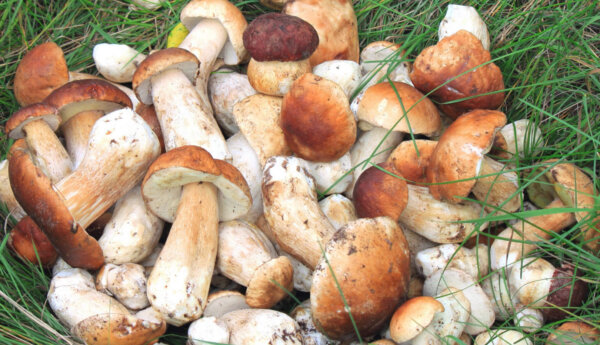
A compound that grows in soil, tested against a pharmaceutical prescribed to tens of millions, held its own — then kept working long after the last dose, and moved things researchers didn’t think were movable.
Depression has been treated the same fundamental way for thirty years.
Adjust the chemistry, maintain daily, hope it holds.
This suggests another possibility: that the brain can reorganize, and sometimes it just needs the right conditions to do it.
The mushrooms were always capable of this. We’re only now running the studies to find out how much.
Water Your Mind 💚
Mushie Media of the Week:
"Trial of Psilocybin versus Escitalopram for Depression"
by: The New England Journal of Medicine