
Pop quiz: What do Santa Claus, flying reindeer, and chimney deliveries have in common?
According to some historians: hallucinogenic mushrooms.
Yes, really. There’s a whole theory that many Christmas traditions—from Santa’s red-and-white suit to Rudolf’s glowing nose to gifts under pine trees—trace back to Siberian shamans tripping on Amanita muscaria mushrooms.
Is it historically accurate? Debatable. Is it a fascinating story about mushrooms in human culture? Absolutely.
While psilocybin mushrooms are having their scientific moment, their cousin Amanita muscaria (the iconic red mushroom with white spots) has been part of human mythology for thousands of years—including possibly inspiring the jolliest myth of all.
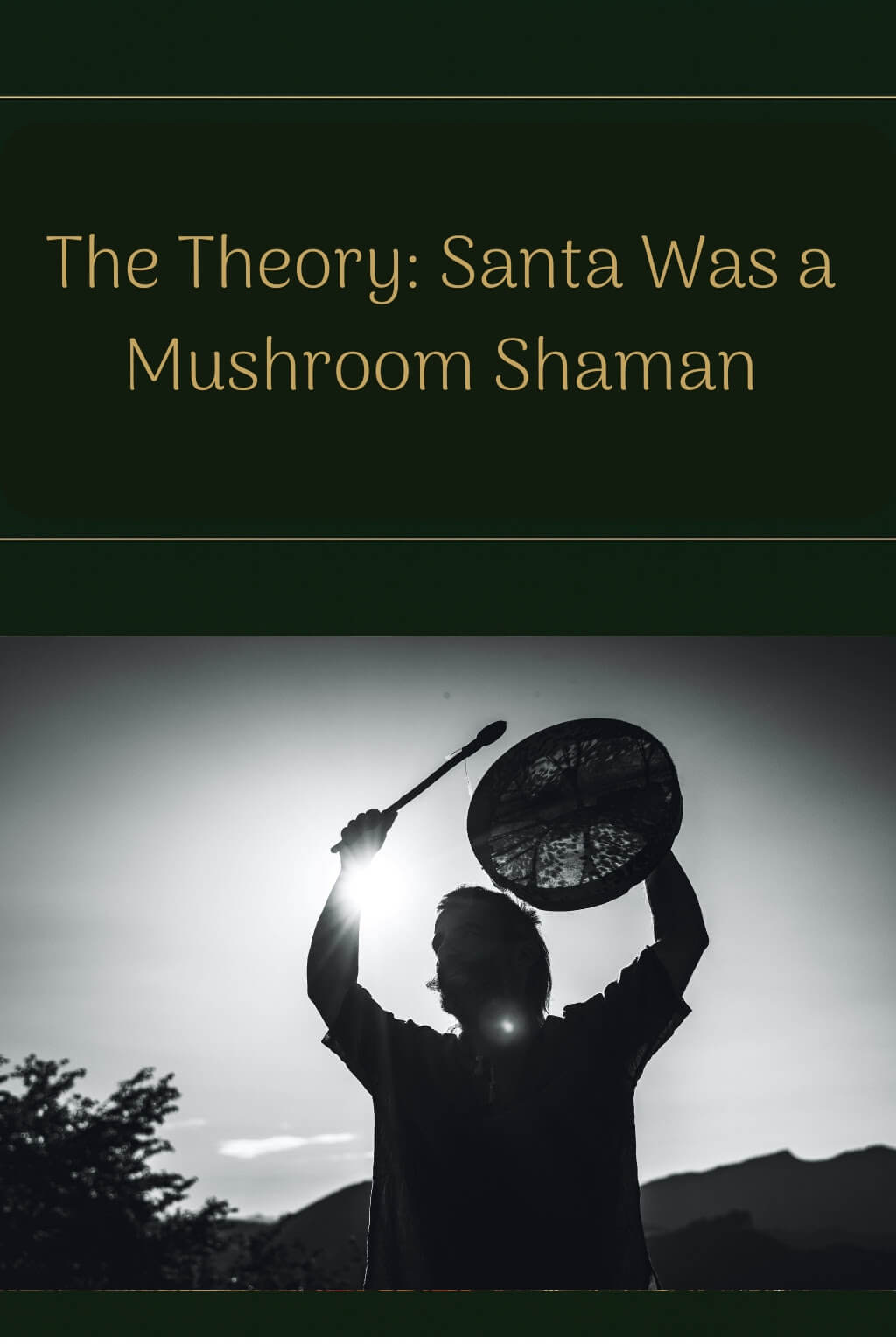
Here's how the story goes:
Siberian shamans would collect Amanita muscaria mushrooms, dry them, and give them as gifts during the winter solstice. Because snow blocked the doors, people entered homes through an opening in the roof—thus the “chimney story”.
The shamans would dress in red and white to honor the mushroom’s colors. They’d work with reindeer, who also ate these mushrooms and appeared to “fly” (at least to people who’d eaten them too).
The mushrooms grow under pine trees—which some scholars say explains why we put red-and-white wrapped gifts under evergreen trees.
Rudolf’s red nose? That’s the mushroom cap. Santa’s North Pole home? That’s where Amanita muscaria grows. The whole “magical flight” around the world? That’s the psychedelic experience.
But Wait—Is This Real?
Here’s where it gets interesting:
Some scholars point to genuine historical practices. The shamans of the indigenous Sámi people of Lapland consumed Amanita muscaria in visionary rituals. Siberian reindeer do eat these mushrooms. The symbolism is striking.
But others call it folk tale, not fact. National Geographic points out there’s scant evidence that Sámi shamans actually used fly agaric in their rituals, and connecting them to Santa becomes cultural appropriation
.
The modern Santa—complete with North Pole, elves, and toy-making—emerged from a 1822 American poem and later illustrations. The red-and-white suit? That appeared in 1863 with stars and stripes, representing the American flag.
So is Santa a mushroom shaman? Probably not. But it’s a hell of a story.
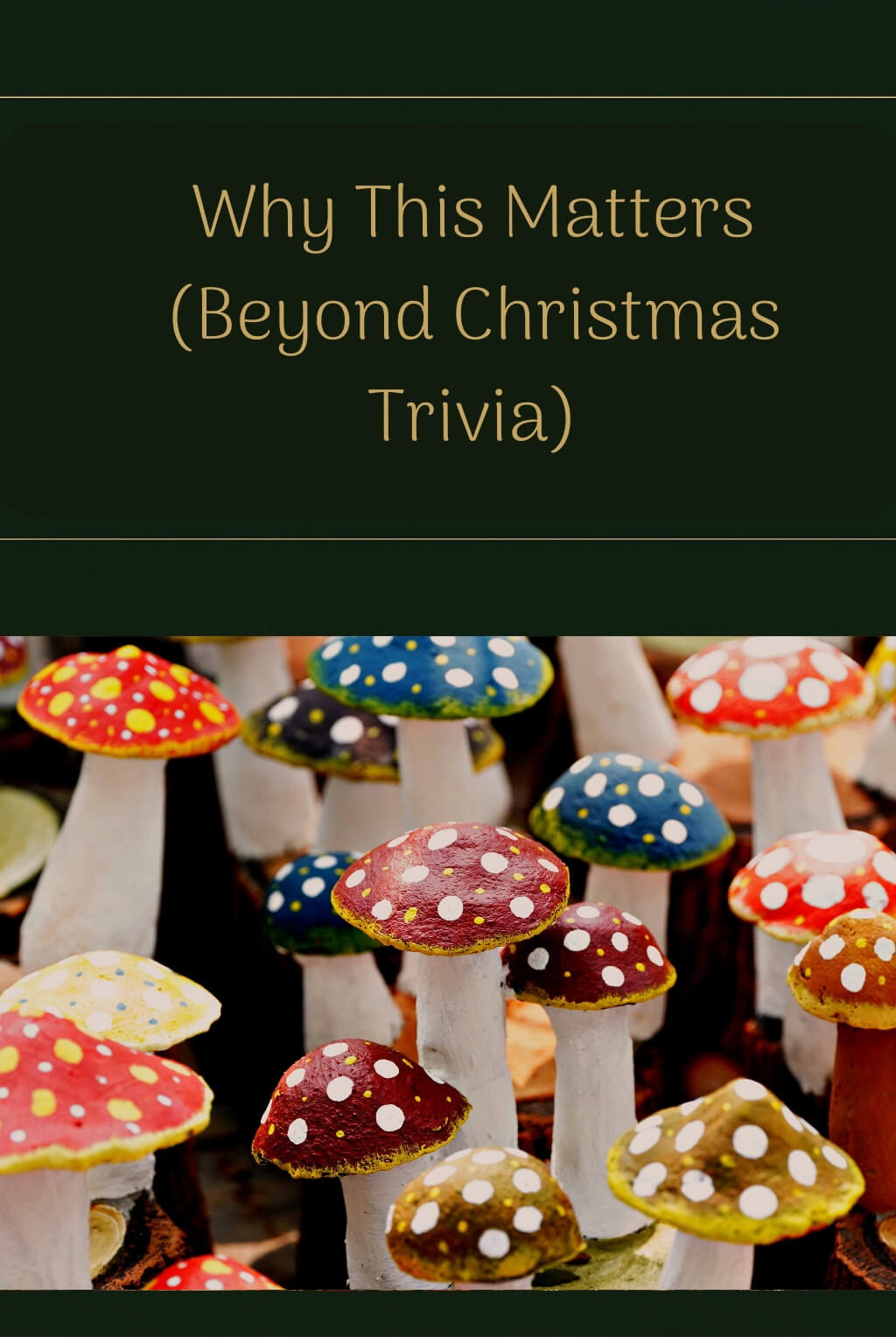
This theory reveals something important about mushrooms in human culture
For thousands of years, across countless civilizations, mushrooms have been teachers, healers, and spiritual guides. They’ve been woven into our myths, religions, and rituals.
The fact that people even theorize about mushrooms inspiring Christmas shows how deeply fungi are embedded in human consciousness.
Whether it’s Amanita muscaria in Siberian shamanism, psilocybin in Mesoamerican ceremonies, or modern clinical trials at Johns Hopkins—mushrooms keep showing up at the intersection of human spirituality and transformation.
The Real Magic
Here’s what’s actually true:
Mushrooms—including psilocybin—have been part of human spiritual practice for millennia. They’ve helped people connect with something larger, gain wisdom, and experience transformation.
The Amanita muscaria mushroom is literally the emoji 🍄, the toadstool in fairy tales, the power-up in Super Mario. It’s the archetypal mushroom of our collective imagination.
And Christmas, at its core, is about the same things mushroom ceremonies have always been about: gifts, generosity, community, wonder, and a little bit of magic.
Maybe that’s the real connection—not historical fact, but shared human longing for transcendence and joy.

This Christmas season, pay attention to mushroom imagery
Christmas ornaments shaped like Amanita muscaria are everywhere, especially in Scandinavia and Northern Europe. Cards, decorations, folklore—the red-and-white mushroom is woven throughout holiday traditions.
Whether or not Santa was a shaman, mushrooms are definitely part of Christmas culture.
And if you’re microdosing psilocybin this holiday season, you’re participating in an ancient human tradition of using mushrooms to enhance experience, deepen connection, and access wonder.
Different mushroom, same intention: opening yourself to magic.
Is Santa Claus based on mushroom-eating shamans? We may never know for sure.
But the theory itself reveals something beautiful: humans have always looked to mushrooms for transformation, healing, and transcendence.
From Siberian tundra to modern clinical trials, from ancient ceremonies to your morning microdose—mushrooms keep showing humans new ways of seeing, being, and connecting.
So this Christmas, when you see that iconic red-and-white mushroom on an ornament, smile.
Whether it inspired Santa or not, it’s a reminder that mushrooms have been guiding humans toward wonder for thousands of years.
And they’re still doing it today.
Until next time,
Mushie Media of the Week:
"Psychedelics as Catalysts for Human Agency"
by: Matthew W. Johnson, PhD