6 Things Psilocybin Did That No One Expected
Psychedelic research has been going on for decades. Some findings were predictable. Some were… not.
Here are six discoveries that caught scientists completely off guard.
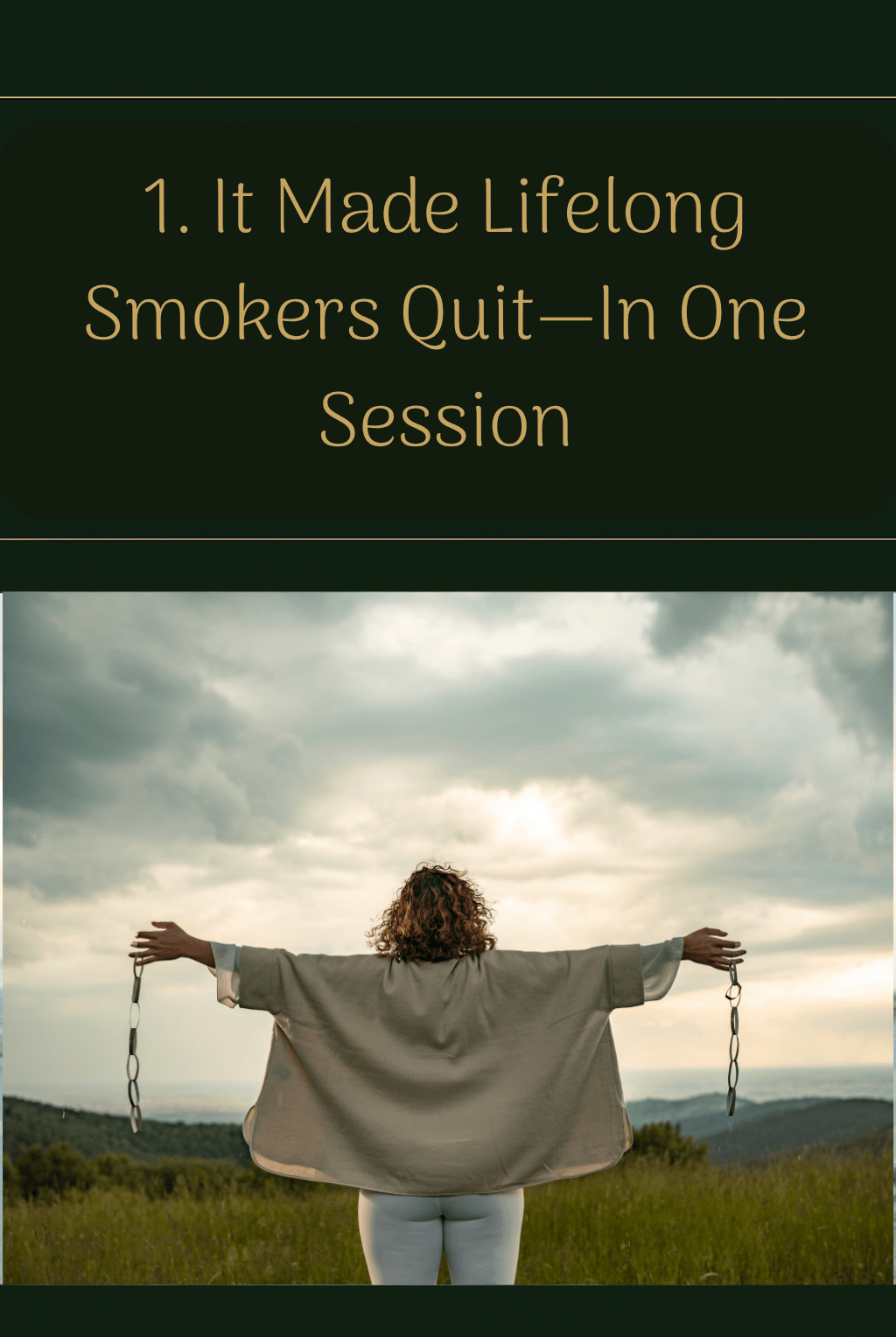
Johns Hopkins ran a pilot study treating nicotine addiction with psilocybin.
The results? 80% of participants were still smoke-free six months later. For context, traditional smoking cessation programs have about a 35% success rate.
One session. One dose. Decades of addiction—gone.
Researchers weren’t expecting this. Neither were the participants.
One volunteer said: “I didn’t think about cigarettes for three days. And when I finally did, I had zero urge to smoke. It was like the craving just… didn’t exist anymore.”
In the 1960s, the "Good Friday Experiment" gave psilocybin to theology students during a religious service.
Almost all of them reported profound mystical experiences—visions, unity with the divine, transcendence.
But here’s the twist: When Johns Hopkins repeated similar studies decades later with people of all belief systems—including atheists—they found the same thing.
Psilocybin produces mystical experiences regardless of whether you believe in God.
Atheists described feeling “connected to something larger.”
Religious people felt closer to their faith. Agnostics had spiritual awakenings.
The experience was universal. The interpretation was personal.
This one is heavy.
Researchers gave psilocybin to people with life-threatening cancer diagnoses who were struggling with existential dread and death anxiety.
The result? A single psilocybin session produced sustained reductions in anxiety and depression—effects that lasted months, even years.
Participants reported feeling at peace. Not because the cancer went away. But because their relationship with death changed.
One patient said: “I’m still dying. But I’m not afraid anymore.”
Scientists didn’t expect psilocybin to touch something as fundamental as the fear of death. But it did.
Personality is supposed to be fixed by age 30. That's what psychologists believed for decades.
But psilocybin broke that rule.
Studies found that a single high-dose psilocybin experience increased “openness”—one of the five major personality traits—and the change lasted at least a year.
People became more creative. More curious. More willing to try new things.
This shouldn’t happen. Adult personality is supposed to be stable.
But psilocybin rewrote the script.
Standard depression treatment: daily medication for months or years. Therapy. Trial and error.
Psilocybin-assisted therapy: two doses, weeks apart, with psychological support.
The results? In clinical trials, psilocybin outperformed traditional antidepressants—and the effects lasted long after the doses wore off.
Participants didn’t just feel better. They described fundamental shifts in how they saw themselves and their lives.
One person said: “It’s like I stepped outside my depression and realized it wasn’t me. It was just something I was carrying.”
Researchers expected some improvement. They didn’t expect remission.
This one sounds made up. But it's real.
Multiple studies found that psilocybin increased prosocial behavior—empathy, altruism, kindness—and the changes persisted for months.
Participants became more patient. More generous. Less self-centered.
One study even found that people who had psilocybin experiences were more likely to engage in environmental activism and volunteer work afterward.
Why? Researchers think it’s because psilocybin dissolves the rigid boundaries between self and other. You stop seeing the world as “me vs. them” and start seeing it as “us.”
And once you feel that connection, it’s hard to be a jerk.
Sixty years of research. Thousands of participants. Hundreds of studies.
And psilocybin keeps doing things no one predicted.
It doesn’t just treat symptoms. It changes how people relate to themselves, to others, and to the world.
That’s not what scientists expected when they started. But it’s what the data keeps showing.
So the next time someone asks you what psilocybin does, don’t just say “it treats depression” or “it helps with anxiety.”
Say: It does things we’re still trying to understand.
Water Your Mind 💚
Mushie Media of the Week:
"Psilocybin Helps Cancer Patients Mental Health with Petros Petridis"
by: Mushroom Revival Podcast