
You've seen it happen.
A patch of lawn, a damp corner of a park, the base of a tree you walk past every day. Empty on Monday. Covered in mushrooms on Tuesday.
It looks impossible, and for most of human history people assumed it was.
Overnight appearances were exactly the kind of thing that got filed under magic.
The real explanation is stranger than the myth.
Because mushrooms don’t grow overnight. They don’t really grow at all.
Every plant you have ever seen got bigger the slow way.
Cell division. One cell becomes two, two become four, and tissue accumulates gradually over weeks and months. It is why you can watch a tomato plant for a fortnight and see barely any difference.
Mushrooms skip that entirely.
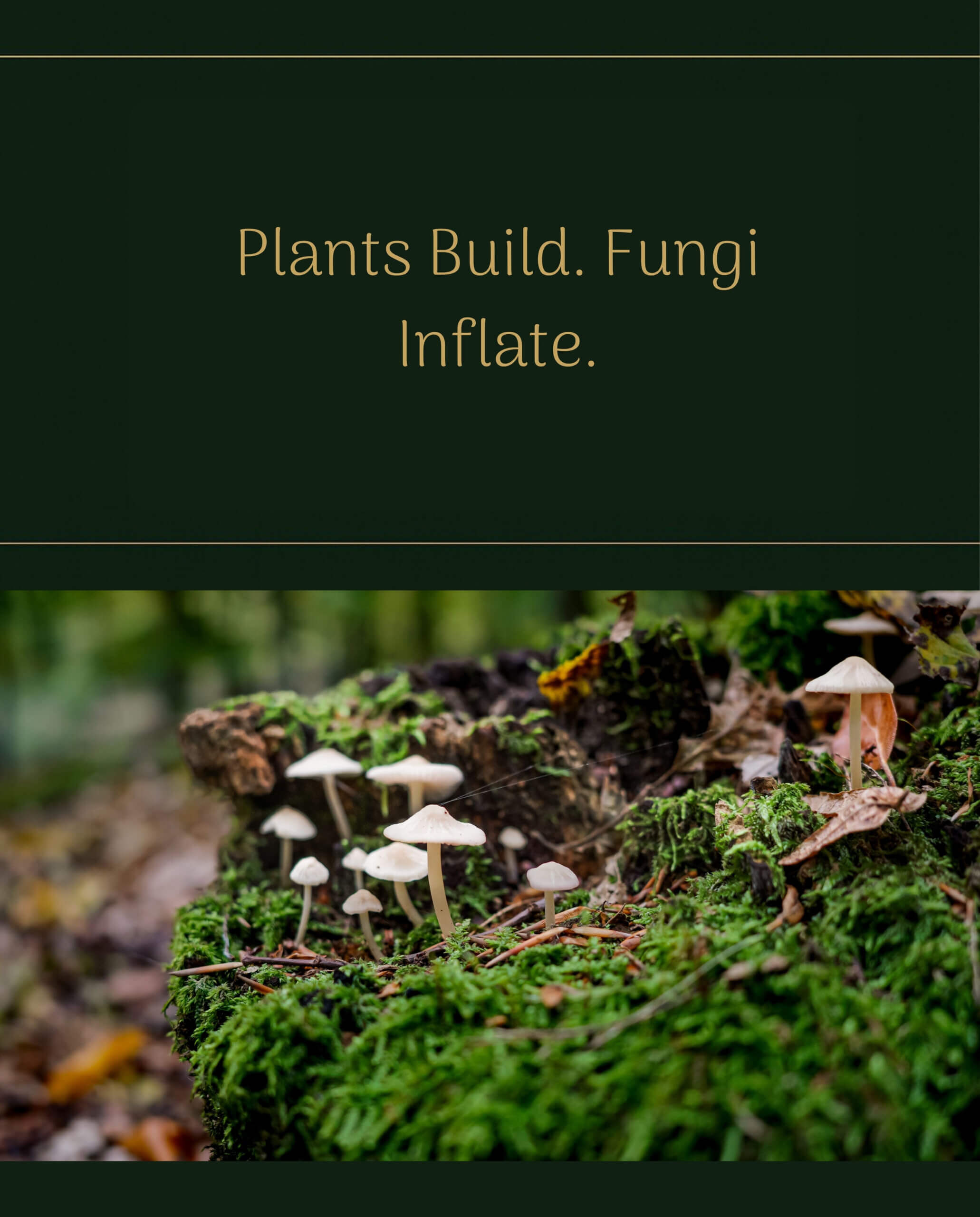
A fungus creates every cell it will ever need during the underground stage, then packs those cells into tiny compressed structures. When the moment arrives, no new cells are made.
The existing ones just fill with water and expand.
Mushrooms are 80 to 95% water by weight. What you are looking at is less an organism that grew and more an organism that was inflated.

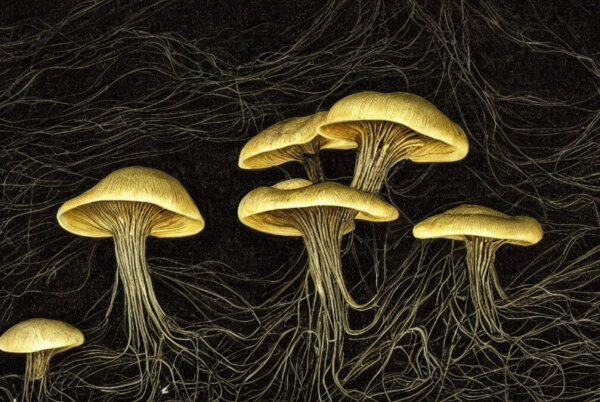
Underneath the soil, long before anything appeared, the mycelium was building.
It forms tiny dense knots of thread, which differentiate into structures called primordia, or pins. These are essentially miniature pre-formed mushrooms, complete with cap and stem, waiting just below the surface.
That preparation takes weeks. Sometimes months.
So the mushroom that appeared on your lawn on Tuesday had been sitting there, fully assembled at microscopic scale, for most of the summer.
It was never growing overnight. It was waiting, and then it unpacked.

Here is why this matters right now, with the equinox landing next Tuesday.
The fungus does not fruit on a whim. It fires when a specific set of conditions line up.
A temperature downshift is one of the critical triggers. Along with a sudden rise in moisture, reduced nitrogen, and the right humidity.
Read that list and then look outside. Cooling nights. Damp ground. Leaf litter beginning to pile up and rot down.
Autumn is not a nice season for mushrooms. Autumn is the signal.
Everything built over the summer has been waiting for exactly this, and it is happening under your feet as you read this.

There is a quiet piece of ruthlessness in this process.
A fungus produces far more primordia than it will ever mature. Many stop developing entirely, which cultivators call aborts.
The organism selects only the most promising pins and channels its resources into those, abandoning the rest to ensure the survivors actually reach spore production.
It is not sentimental about it. Dozens of half-built mushrooms get left behind so that a few can finish.
Which is a strangely familiar strategy for anyone who has ever had more ideas than time.
If you want to see this happening rather than just read about it, the timing is specific.
Three to five days after a steady soaking rain.
Go on day one and everything is still too small to notice. Wait until day ten and the good ones are rotting or full of insects. The window in between is when a forest floor is at its most active.
Look at the base of old trees, in leaf litter, on fallen logs, in the damp shade where nobody bothers to look.
Right now is the best week of the year for this. It will not be this good again until next September.

There is something worth sitting with in the way a mushroom arrives.
All the real work happened out of sight. Months of a network spreading through soil, gathering resources, assembling structures nobody could see. Then a change in the weather, and overnight the result is unmistakable.
The sudden part was never sudden. It was just the visible part.
That is true of most things that appear to happen all at once. The breakthrough, the shift, the moment something finally clicks. The emergence is fast because the preparation was long.
The same holds for the mushrooms in the jar on your shelf. Whatever they do, they do gradually, underground, in ways you do not notice until one day you do.
So this week, go and look. Somewhere damp, three days after rain, at the base of an old tree.
The biggest event of the fungal year is happening right now, and almost nobody goes outside to watch it.
Water Your Mind 💚
Mushie Media of the Week:
"Can Mushrooms Really Grow Overnight?"
by: Biology Insights